


blog
Handling in Bad Weather: Essential Tips for Motorcyclists to Stay Safe

Sep
Handling in bad weather is a common concern for motorcyclists, especially when riding in challenging conditions like rain or strong winds. Successfully navigating these situations requires a blend of knowledge, skill, and preparation. Whether you’re a seasoned rider or new to the road, mastering the art of handling in bad weather can boost your confidence and safety. Below, we explore practical strategies to help you manage your motorcycle effectively in adverse weather conditions.
Gear Up for Handling in Bad Weather
The right gear plays a crucial role in handling in bad weather. A full-face helmet with an anti-fog visor or pinlock system ensures clear vision, while high-visibility clothing with reflective elements helps other drivers see you in low-light conditions. Investing in waterproof gear, including gloves and boots, keeps you dry and comfortable, allowing you to focus on the road. For added protection, consider using latex gloves inside your riding gloves and wearing durable weatherproof boots.
Helmet and Visibility
Choose a helmet with excellent ventilation and visibility features. Applying a water-repellent coating to your visor can prevent water buildup, while an anti-fog treatment on the inside keeps your vision clear. High-visibility gear enhances your presence on the road, especially in heavy rain or fog, significantly improving your safety when handling in bad weather.

Mastering Power Delivery and Throttle Control
When riding in adverse weather, power delivery and throttle control are key to maintaining stability. Bad weather often reduces road traction, making it essential to manage your throttle inputs carefully. Gradually rolling on the throttle, especially when exiting corners or accelerating, helps you maintain control and avoid slipping. If your motorcycle is equipped with adjustable power modes, switching to a rain or low-power mode can further enhance your ability to handle your bike in challenging conditions.
Practice Gradual Power Delivery
In wet or windy conditions, abrupt throttle inputs can cause loss of traction. Practice rolling on the throttle smoothly, particularly when accelerating out of turns. This technique not only improves your control but also reduces the chances of skidding, which is vital for safe handling in bad weather.
Managing the Friction Zone and Cornering Techniques
Mastering the friction zone and cornering techniques is essential for handling in bad weather. The friction zone, where the clutch engages with the engine, requires precise control to prevent sudden power surges. When approaching a corner, enter at a controlled speed, maintain a wide line, and gradually add throttle as your lean angle decreases. This approach minimizes the risk of sliding, ensuring you maintain control throughout the turn.
Reflecting and Learning After a Close Call
Reflecting on past close calls or incidents is a valuable way to improve your handling in bad weather. Analyze what went wrong and identify areas for improvement. Learning from these experiences, whether it’s adjusting your speed, modifying your riding line, or improving your gear, enhances your overall skill set and prepares you for future challenges.
The Importance of Quality Gear and Regular Maintenance
Using quality gear and keeping your motorcycle well-maintained are vital for handling in bad weather. Regularly check your tire pressure, brakes, and lights before riding in adverse conditions. High-quality tires with good tread provide better grip on wet surfaces, and properly functioning brakes ensure you can stop safely when needed. Reliable gear, combined with regular bike maintenance, reduces the risk of accidents and boosts your confidence on the road.
Continuous Practice for Improved Handling in Bad Weather
Improving your handling in bad weather requires continuous practice. Take the time to ride in different weather conditions, focusing on one skill at a time. Whether it’s throttle control, cornering, or braking, consistent practice helps you become more comfortable and confident, turning bad weather rides from daunting to manageable.
Handling in bad weather is a skill that every motorcyclist should develop. By gearing up properly, mastering throttle control, and regularly practicing in different conditions, you can tackle the challenges of bad weather riding with confidence. Remember, preparation and the right mindset are key to staying safe and enjoying your motorcycle, no matter what the weather throws your way.
About UPBIKERS
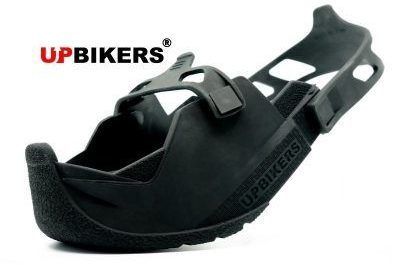
Benefits of Using Upbikers:
- Improved comfort and confidence: Upbikers can help you feel more comfortable and confident on your bike by giving you the extra height you need to reach the ground and control the bike properly.
- Reduced risk of injury: Upbikers can also help to reduce your risk of injury by making it easier to mount and dismount the bike, and by giving you a better grip on the ground when you come to a stop.
- Versatility: Upbikers can be used with any type of footwear, and they can be easily put on and taken off.
If you’re a short rider looking for a way to improve your comfort, confidence, and safety on your trail bike, then Upbikers is a great solution.
In addition to the benefits listed above, Upbikers are also a very affordable way to make a big difference in your riding experience. For a small investment, you can gain the extra height you need to enjoy your trail bike to the fullest.
So if you’re ready to take your trail riding experience to the next level, be sure to check out Upbikers.
Check out our SHOP
And don’t forget to follow us on Facebook, Instagram, or TikTok so you don’t miss any updates.

Tall motorbike? No problem