



Blog
Upbikers accessory for short motorcyclists adds four centimeters of height
May
How MotoGP changed: ban on altitude-altering systems and the technical freeze (2020-2021)
In 2020, MotoGP management approved a series of technical measures that redefined the balance between performance, costs, and safety. The main decisions were a ban on devices capable of altering the bike’s ride height during the race—such as hydraulic or mechanical systems used to improve traction at the start—and a freeze on development of chassis, engines, and aerodynamic packages until 2021. These measures, designed to reduce non-sporting advantages and contain costs, were applied universally to all manufacturers and had implications in lower categories such as Moto2.
What exactly does the regulation prohibit?
The regulations clearly state that systems that modify the ride height during movement or acceleration are not permitted; for example, the well-known “hole shot” devices or solutions that, by improving chassis tilt, increase traction and reduce aerodynamic drag at launch. The regulations cover both hydraulic components and software-controlled mechanical mechanisms.
To review the official statement regarding the engine and aero package freeze: MotoGP – Engine and aero package freeze . News coverage and technical analyses were published in outlets such as GPone and Corriere dello Sport , explaining the scope and reasons behind the decision.
Motivations: cost, equality, and safety
The objective was threefold: to reduce the technical arms race between manufacturers, to prevent solutions that offered temporary aerodynamic advantages, and to improve track safety by limiting complex systems that could fail. The freeze emphasized preventing continuous development of the chassis, swingarm, engine, and aerodynamics, and remained in effect for all manufacturers, with or without technical concessions. For a specific technical analysis of chassis and forcellone regulations, see Paddock-GP .
Practical impact on competition and factories
On the track, the elimination of ride height adjustment systems made the differences in traditional setups more apparent: suspension, mapping, and mechanical adjustments regained prominence. Teams had to optimize geometry and electronics within fixed limits, while testing and updates in Moto2 were also restricted; Moto2, with standardized Triumph engines, experienced limitations in introducing evolutions and continuous testing.
| Device type | State according to regulations | Main effect |
|---|---|---|
| Hydraulic systems for height variation | Prohibited | They improve traction on launches and change the aerodynamics; now they are not allowed. |
| Software-controlled mechanical mechanisms | Prohibited | They alter dynamic geometry and acceleration advantage |
| Conventional suspension adjustments (spring/preload) | Permitted within homologation | Manual optimization without dynamic change during the race |
| Aerodynamic improvements approved | Temporarily frozen | No changes until the end of the established period |
Consequences for the technical project of the brands
The technical freeze forced the competition departments to prioritize reliability and fine-tuning existing components. Manufacturers who had invested in movable aerodynamic solutions or complex electronically actuated swingarms saw their ability to exploit those advantages limited, which further homogenized the grid and reduced development costs.
| Scope | Immediate impact | Expected result |
|---|---|---|
| Competition (MotoGP) | Fewer mobile solutions; more emphasis on fine-tuning | A more balanced grill and reduced costs |
| Manufacturers | Freezing of developments in engine, aero and chassis | Reorientation towards optimizing what already exists |
| Lower categories (Moto2) | Limited testing and upgrades; standard Triumph engine | Technical uniformity and budgetary control |
What does a street motorcyclist need to know?
Although these regulations affect the world of motorsport, their technical effects trickle down to production and the aftermarket: greater attention to suspension, geometry adjustments, and more reliable passive solutions. If you drive daily, you might be interested in researching leading suspension brands like Öhlins or WP Suspension , which develop components designed for stability and control without relying on complex systems.
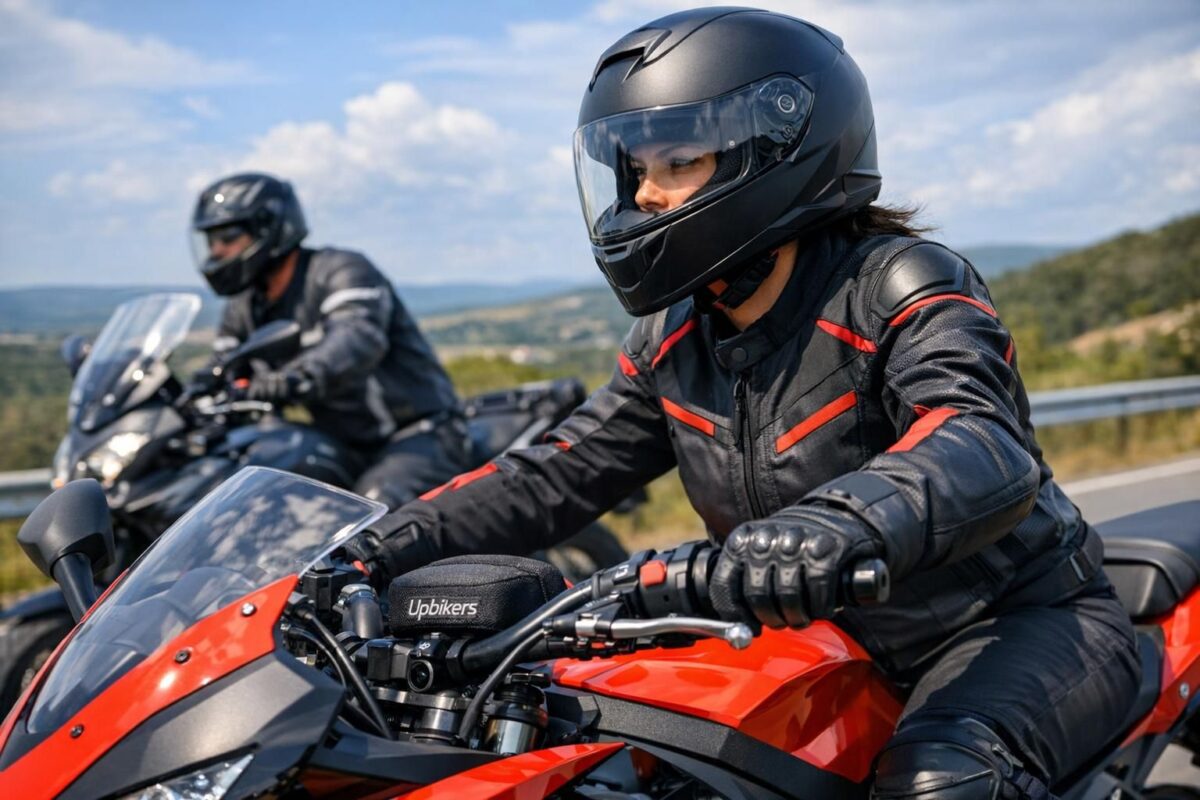
Furthermore, for motorcyclists looking to improve control during stops and maneuvers, there are practical and simple solutions. For example, Upbikers provide a 4-centimeter increase in height, a tangible benefit for those who can barely reach the ground and need greater stability at traffic lights or on uneven terrain. They are a practical alternative that requires no structural modifications: Upbikers .
References and recommended readings
- MotoGP – Engine and aero package freeze
- GPone – Coverage on technical freeze
- Corriere dello Sport – Technical modifications
- Paddock-GP – Chassis and forcesole adjustment
- If you are looking for information on manufacturers: Ducati , Yamaha , Honda .
In short, restrictions on height-altering devices and the technical freeze marked a period of adjustment in MotoGP, favoring more traditional solutions and focusing on the efficiency of the mechanical components. For urban riders, this translates into the availability of thinner, more reliable components and practical options like upbikers—a simple way to gain 4 centimeters and improve confidence at stops without modifying the bike’s structure.